2013

V. Prckovska, Alard F. Roebroeck, Pim Pullens, Anna Vilanova, and B.M. ter Haar Romeny
Int J Biomed Imaging, 2013
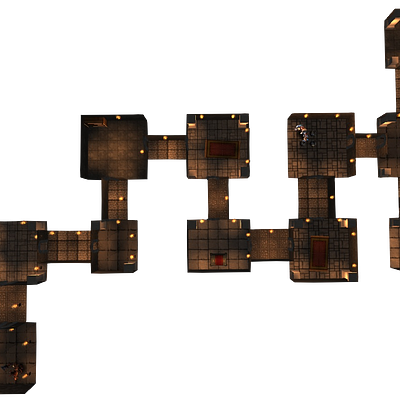
Pedro Silva, Pascal Mueller, Rafael Bidarra, and Antonio Coelho
In Proceedings of PCG Workshop, 2013

2012

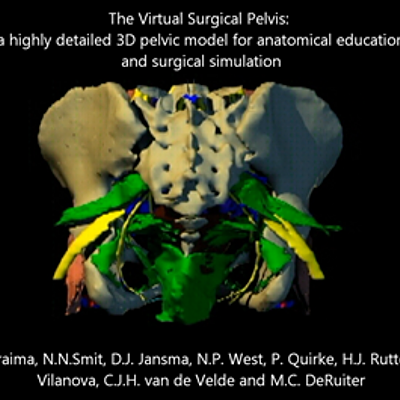
A distance query returns all information related to the structures inside the sphere.
Noeska Natasja Smit, Anne C. Kraima, Daniel Jansma, Marco C. Deruiter, and Charl P. Botha
In Proceedings of 3D Physiological Human Workshop, 2012
Voorspellen van visueel functieverlies door epilepsiechirurgie
B.M. ter Haar Romeny, C. Tax, R. Duits, Anna Vilanova, C. Jacobs, et al.
Epilepsie : Periodiek voor Professionals, 2012
Automatic 3D material style transfer from different source images (insets) to a target 3D scene using our approach
Chuong Nguyen, Tobias Ritschel, Karol Myszkowski, Elmar Eisemann, and Hans-Peter Seidel
Computer Graphics Forum, 2012
Afterimage simulation of a traffic light over time. Note the over-time change of colors, blur and shape in the afterimage
Tobias Ritschel and Elmar Eisemann
Computer Graphics Forum, 2012
Francesco Banterle, Alessandro Artusi, Tunc Aydin, Piotr Didyk, Elmar Eisemann, et al.
In Proceedings of Eurographics (Tutorials), 2012
When stereo content (a; b) is manipulated (c), we quantify the perceived change considering luminance, and disparity (d), whereas previous work leads to wrong predictions (e) e. g., for low-texture areas, fog, or depth-of-field (arrows).Please note that all images in the paper, except for disparity and response maps are presented in anaglyph colors.
Piotr Didyk, Tobias Ritschel, Elmar Eisemann, Karol Myszkowski, Hans-Peter Seidel, and Wojciech Matusik
ACM Transactions on Graphics, 2012
Spatial querying through sphere selection. A distance query reveals the literature and anatomical landmarks associated to the structures within the selection sphere.
Noeska Natasja Smit, Anne C. Kraima, Daniel Jansma, Marco C. Deruiter, and Charl P. Botha
In Proceedings of EuroVis (Short Papers), 2012
From left to right: Starting from an original depth map a pixel disparity map is computed and then a disparity pyramid is built. After multi-resolution disparity processing, the dynamic range of disparity is adjusted and the resulting enhanced disparity map is produced. The map is then used to create enhanced stereo image.
Piotr Didyk, Tobias Ritschel, Elmar Eisemann, Karol Myszkowski, and Hans-Peter Seidel
In Proceedings of Human Vision and Electronic Imaging, 2012
A temporal maximum speed volume (tMSV) takes the maximum blood-flow speed for each voxel throughout the cardiac cycle. An initial surface can be extracted from this static representation of the blood-flow regions. A standard marching cubes algorithm is employed to generate the iso-surface
R.F.P. van Pelt, Thuc Nghi Nguyen, B.M. ter Haar Romeny, and Anna Vilanova
International Journal of Computer Assisted Radiology and Surgery, 2012
Overview of the extraction approach: Based on the flow grid and the aneurysm ostium we seed streamlines at the ostium into the aneurysm. We identify several local line properties on the streamlines to compute a quality scalar field on the ostium. Given this scalar field we extract a seeding curve on the ostium, which is used to construct the boundary contour of the inflow jet. A second scalar field is computed on the aneurysm surface to indicate the impingement zone. Finally, we visualize both information expressively.
R. Gasteiger, D. Lehmann, R.F.P. van Pelt, G. Janiga, O. Beuing, et al.
IEEE Transactions on Visualization and Computer Graphics, 2012
The preprocessing steps. Left Definition of the contours, Middle Definition of scar (gray zone (in yellow) and core zone (in red)) and Right The composition of the mesh based on the contours in 3D. The last described preprocessing step of indicating the position of the origin of the left main coronary artery is not included in this figure
Corine Godeschalk-Slagboom, Rob van der Geest, Katja Zeppenfeld, and Charl P. Botha
International Journal of Computer Assisted Radiology and Surgery, 2012
Standard 4,0962 shadow map with perspective warping, rendering at 64 FPS (left). QVSM with a maximum refinement level of 32 × 32 and 1,0242 tiles, rendering at 32 FPS (right). Adaptive subdivision effectively removes aliasing in cases that are difficult for reparametrization and global partitioning methods.
Elmar Eisemann, Ulf Assarsson, Michael Schwarz, Michal Valient, and Michael Wimmer
In Proceedings of SIGGRAPH Courses, 2012
An overview of the application window with two datasets. Each dataset is opened in its own child window. Each child window contains of three views: the pixmap view on the top-left, the slice views on the top right and the anatomical view on the bottom.
Andre F. van Dixhoorn, Julien Milles, Baldur van Lew, and Charl P. Botha
In Proceedings of Visual Computing in Biology and Medicine, 2012
 Example of a transformation into a multi-component target
Marcelo Renhe, Antonio Oliveira, Claudio Esperança, and Ricardo Marroquim
In Proceedings of SIBGRAPI, 2012
Left: Brute force method. Center: Hierarchical template matching. Right: Floating Texture’s optical flow implementation
Matteo Dellepiane, Ricardo Marroquim, Marco Callieri, Paolo Cignoni, and Roberto Scopigno
IEEE Transactions on Visualization and Computer Graphics, 2012
Two examples of interactive visualizations made with the volume renderer of Kroes et al.
Charl P. Botha, Bernhard Preim, Arie Kaufman, Shigeo Takahashi, and Anders Ynnerman
CoRR, 2012
Snapshots of our 3D framework, visualizing an example of simulation
Rafael Hocevar, Fernando Marson, Vinicius Cassol, Henry Braun, Rafael Bidarra, and Soraia R. Musse
In Proceedings of IVA, 2012
a) Input: Kaleidoscope image. b) User-drawn mask (green checkerboard pattern). c) User-drawn mask isolated. d) Approximate visual hull generated from (c) using image-based shading. e) Resulting labeling via visual hull
Oliver Klehm, I. Reshetouski, Elmar Eisemann, Hans-Peter Seidel, and Ivo Ihrke
In Proceedings of Vision, Modeling, and Visualization, 2012