2010

Tim Tutenel, Ruben M. Smelik, Rafael Bidarra, and Klaas Jan de Kraker
In Proceedings of AIIDE, 2010
N. Sepasian, Anna Vilanova, J.H.M. ten Thije Boonkkamp, and B.M. ter Haar Romeny
Tech Report, 2010
Piotr Didyk, Elmar Eisemann, Karol Myszkowski, and Hans-Peter Seidel
ACM Transactions on Graphics, 2010
Casper Harteveld, Rui Guimaraes, Igor Mayer, and Rafael Bidarra
Simulation and Gaming, 2010

2009

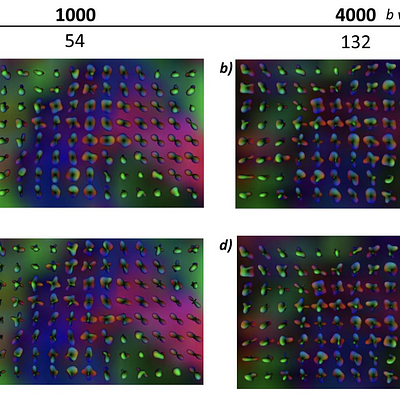
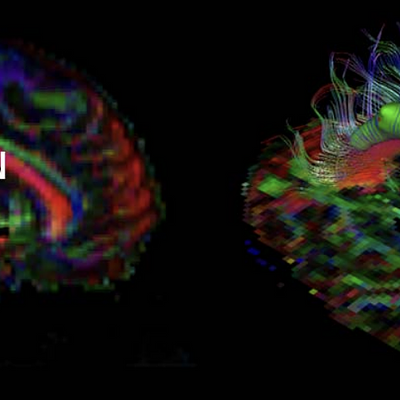
In vivo results of the brain area of  corpus callosum and corona radiate.
V. Prckovska, Alard F. Roebroeck, Pim Pullens, Anna Vilanova, and B.M. ter Haar Romeny
In Proceedings of 17th Scientific meeting \& exhibition of the International Society for Magnetic Resonance in Medicine (ISMRM 17), 2009
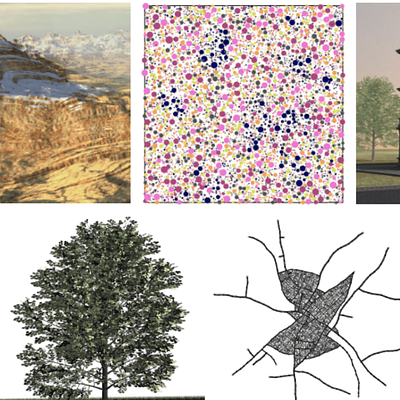
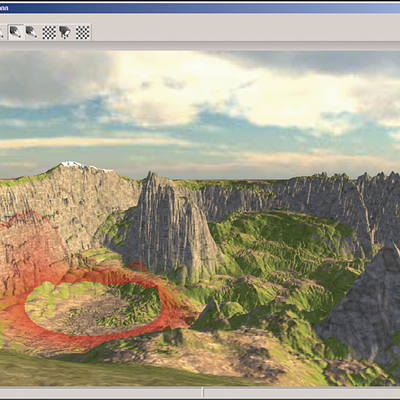
 a) Terrain interactively created using procedural brushes (De Carpentier and Bidarra, 2009). b) Plant distribution simulation (Deussen et al., 1998). c) Complex building facade (Finkenzeller and Bender, 2008). d) A 3D render of a height-map generated using L3DT (Torpy, 2009). e) A plant model generated using XFrog (Greenworks, 2009). f) and g) A road network and corresponding city generated using CityEngine (Procedural, inc., 2009).
Ruben M. Smelik, Klaas Jan de Kraker, Saskia A. Groenewegen, Tim Tutenel, and Rafael Bidarra
In Proceedings of CASA'09 Workshop on 3D Advanced Media in Gaming and Simulation, 2009
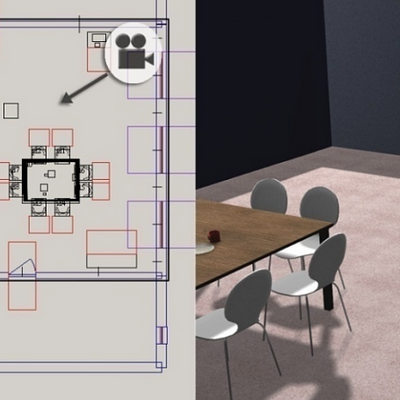
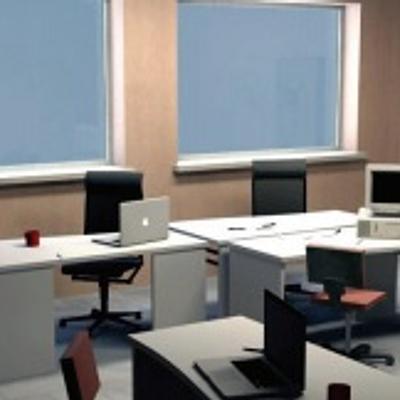
Automated generation: (left) 2D floor plan of a house created with our solving approach; (right) 3D visualization of the living room (from viewpoint indicated by camera in the left image).
Tim Tutenel, Ruben M. Smelik, Rafael Bidarra, and Klaas Jan de Kraker
In Proceedings of CASA'09 Workshop on 3D Advanced Media in Gaming and Simulation, 2009
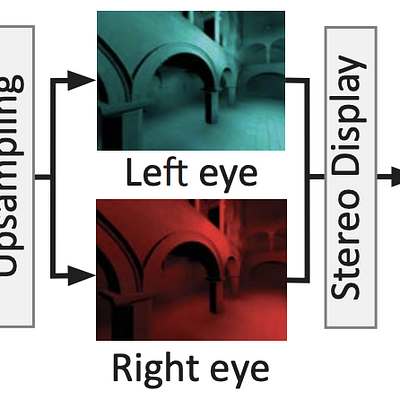
Generating stereo frames using our upsampling
Piotr Didyk, Elmar Eisemann, Tobias Ritschel, Karol Myszkowski, and Hans-Peter Seidel
In Proceedings of Intel Visual Computing Research Conference, 2009
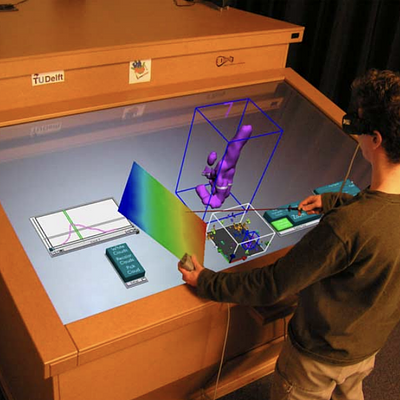
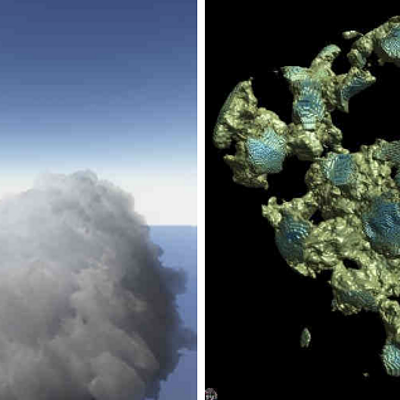
A user working on the virtual environment running on our Virtual Workbench
T. Heus, H.J.J. Jonker, H.E.A. van den Akker, Eric Griffith, Michal Koutek, and Frits H. Post
Journal of Geophysical Research-Atmospheres, 2009
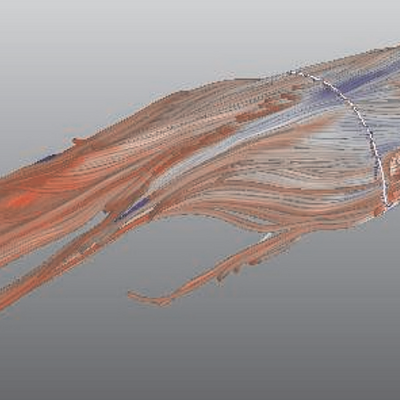
Fiber tracking of muscle in human forearm.
Ralph Brecheisen, B. Platel, Anna Vilanova, and B.M. ter Haar Romeny
IEEE Transactions on Visualization and Computer Graphics, 2009
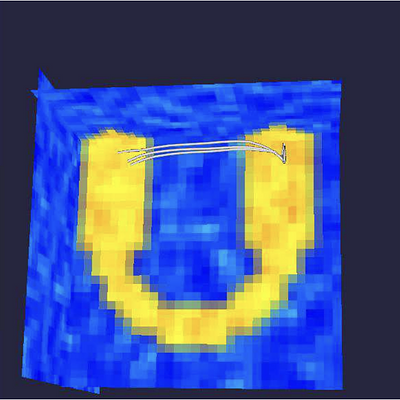
Geodesic computed using HJ equation
N. Sepasian, J.H.M. ten Thije Boonkkamp, Anna Vilanova, and B.M. ter Haar Romeny
In Proceedings of MICCAI 2009 Workshop on Diffusion Modelling and the Fibre Cup (DMFC 2009, London, UK, September 24th, 2009), 2009
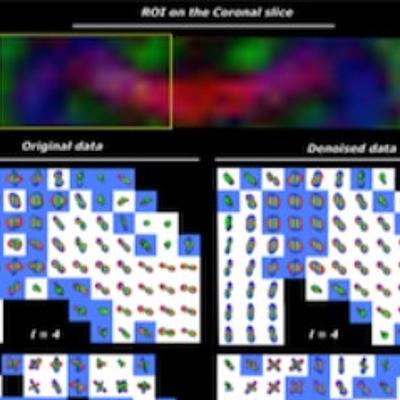
V. Prckovska, Anna Vilanova, C. Poupon, B.M. ter Haar Romeny, and M. Descoteaux
In Proceedings of ICT Innovations, 2009
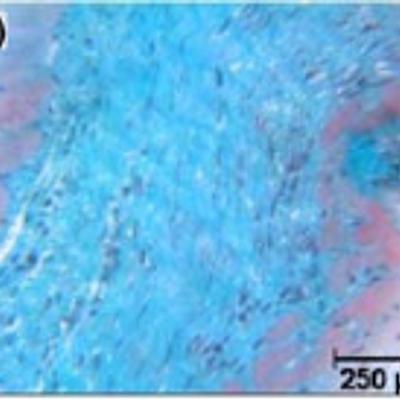
G.J. Strijkers, A. Bouts, W. Matthijs Blankesteijn, T.H.J.M. Peeters, Anna Vilanova, et al.
NMR Biomed, 2009
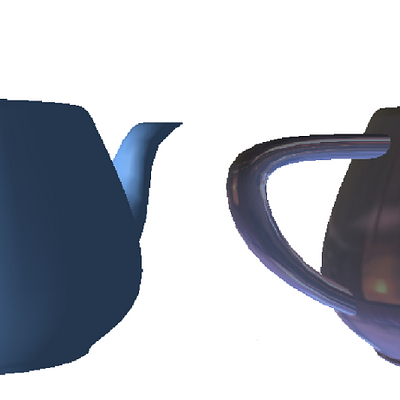
The teapot rendered with a constant color (left) and a different environment map (right)
Ricardo Marroquim and André Maximo
In Proceedings of SIBGRAPI Tutorials, 2009
Heightfield
Giliam J.P. de Carpentier and Rafael Bidarra
In Proceedings of FDG, 2009
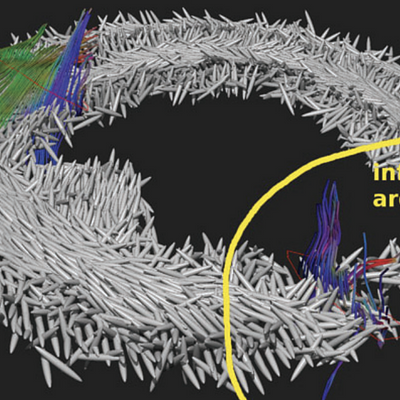
Our new rendering method using ellipsoids with fixed shape to show the fibre orientations in the cross section of an infarcted heart, which was scanned 28 days after the infarct. We also tracked fibres from two different seeding areas. The resulting fibres were rendered as thin tubes and RGB colouring of the fibre orientation was used.
T.H.J.M. Peeters, Anna Vilanova, and B.M. ter Haar Romeny
Computer Graphics Forum, 2009
Left cingulum segmented with estimated wFA=0.8 and w for a 128x128x66 DT volume. Left: P – positive region; N – negat region.
P. Rodrigues, Anna Vilanova, T. Twellmann, and B.M. ter Haar Romeny
In Proceedings of 17th Scientific Meeting, International Society for Magnetic Resonance in Medicine, Honolulu, 2009
Images show volume data that consist of billions of voxels rendered with our dynamic sparse octree approach. Our algorithm achieves real-time to interactive rates on volumes exceeding GPU memory capacity by far, tanks to efficient streaming and ray-casting solutions. Basically, the volume is only used at the resolution that is needed to produce the final image. Besides the gain in memory and speed, our rendering provides is inherently anti-aliased
Cyril Crassin, Fabrice Neyret, Sylvain Lefebvre, and Elmar Eisemann
In Proceedings of SI3D, 2009
Rafael Bidarra and Xiaopeng Zhang
Int J Comput Games Technol, 2009
 To close the remaining gaps, the straight line at the right-hand side (A), a circular arc interpolation is performed automatically using the center of gravity of the contour as the center of the circle (B). For the radius, linear interpolation is used from r1 to r2. The repaired contour is presented in (C)
K. Sihan, Charl P. Botha, Frits H. Post, Sebastiaan de Winter, Gonzalo Nieves, et al.
Catheter Cardiovasc Interv, 2009